How to Choose a B2B SaaS SEO Agency: A Buyer’s Guide
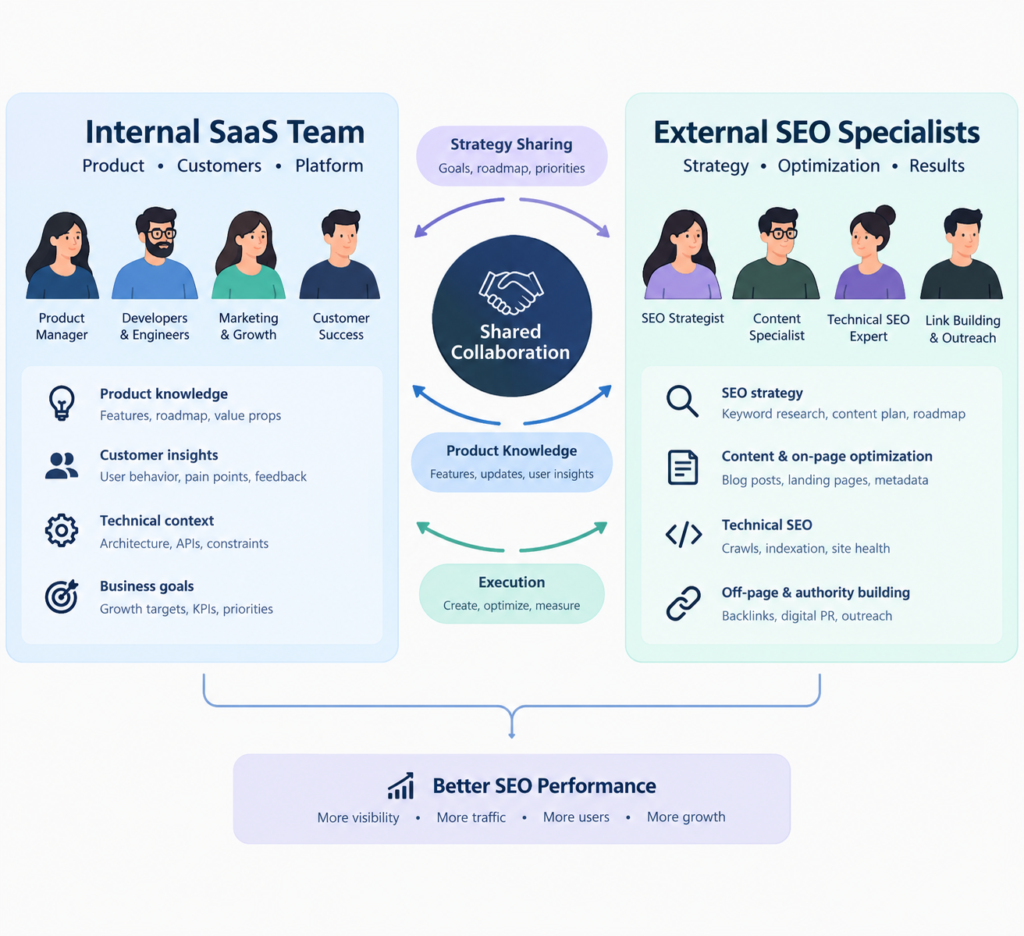
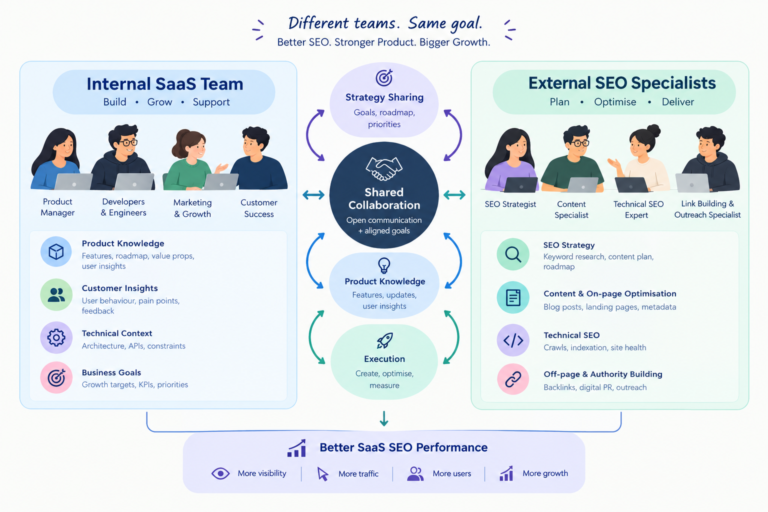
Choosing a B2B SaaS SEO agency is not simply a matter of comparing article counts or asking who can promise the fastest rankings. You are choosing a partner to understand a technical product, identify where buyer demand exists, coordinate content and website work, and show whether that work is contributing to commercial goals.
That makes the decision more involved than hiring a generalist writer. A SaaS organic growth program can include keyword and competitor research, technical SEO, site architecture, product-led content, comparison pages, AI search visibility, authority building, publishing, and conversion measurement. Some companies need help across the whole system. Others need a focused audit or a specialist to fill one gap in an existing team.
This guide gives you a practical way to tell the difference. It covers what to clarify before you speak to agencies, what evidence to request, how to compare proposals, and what a good first conversation should produce.
Start with the business problem, not the agency’s package
Before looking at proposals, describe the problem you need to solve in one or two sentences. For example: “Organic search brings visitors, but few are from our target accounts,” or “We have technical recommendations but no one coordinating implementation,” or “Our competitors appear in category comparisons and AI answers while our brand is missing.”
This keeps the conversation grounded. An agency should be able to connect its proposed work to your situation instead of presenting the same package to every company.
Write down a few basics before the first call:
- What does the product do, and which customer problem does it solve?
- Who is involved in the buying decision?
- Which industries, company sizes, or regions matter most?
- How long is a typical sales cycle?
- Which channels currently produce qualified conversations?
- What is already working in organic search?
- What do you suspect is blocking growth?
- What can your team realistically support in the next quarter?
You do not need perfect answers. The gaps themselves are useful. A thoughtful agency will help investigate them, not pretend that a keyword export is a substitute for understanding your product and sales motion.
Amy’s Brew describes discovery as including product and stakeholder interviews, competitor and search-results analysis, and analytics review. That kind of discovery is intended to ground the plan in the company’s actual product, buyers, and competitive context. See the Amy’s Brew service and methodology overview for how that work is described.
What should a SaaS SEO agency understand?
SaaS search is shaped by product details and the way buyers evaluate software. A visitor may be researching a problem, learning a category, comparing vendors, checking integrations, reviewing security requirements, or validating a purchase with colleagues. Each situation calls for a different answer and often a different page.
An agency working in B2B technology should be comfortable asking specific questions about product capabilities, use cases, technical constraints, implementation, integrations, pricing models, and customer fit. It should know when it does not understand something and have a process to verify technical claims with your team.
This matters because generic writing can sound fluent while being inaccurate. A page that blurs the difference between a webhook and an API, overstates an integration, or implies a product feature that does not exist can damage trust. Good content is not just readable; it is faithful to what the product actually does.
Ask the agency:
- How do you learn the product before planning content?
- What source materials do you need from us?
- Who reviews technical accuracy?
- How do you handle disagreement between search demand and product positioning?
- How do you make sure content remains useful to sales and product marketing?
A strong answer will describe interviews, documentation review, customer language, review responsibilities, and a clear fact-checking step. “We’ll just send you drafts for approval” may not be enough if the agency has not built the context needed to write a sound draft in the first place.
Evaluate the strategy, not just the keyword list
Keyword research is a tool, not a strategy by itself. A useful plan explains which buyer need a page serves, what kind of page is appropriate, why the topic matters to the business, and how it relates to the rest of the site.
A SaaS content plan may include several page types:
- Educational pages that explain a problem or concept.
- Use-case pages that connect the product to a specific workflow or audience.
- Comparison pages that help buyers evaluate categories or vendors.
- Alternatives pages for buyers considering a competitor.
- Integration pages that answer compatibility questions.
- Pricing, security, implementation, or migration pages that reduce decision friction.
- Product pages that clearly explain capabilities and fit.
The agency should distinguish informational demand from commercial investigation and decision-stage intent. A large search volume does not automatically mean a topic will attract the right buyer. Conversely, a lower-volume comparison query may matter because the searcher is actively evaluating options.
Ask the agency to explain a sample recommendation from beginning to end: the buyer question, intended audience, search intent, page format, relationship to your product, internal links, and how you will assess its usefulness. If the explanation stops at estimated traffic, you have not yet heard the commercial rationale.
Amy’s Brew has a full-funnel B2B SaaS keyword framework that organizes keyword patterns by buyer stage rather than presenting them as a volume-sorted list. That resource is a good example of the distinction between a keyword inventory and a plan for what to publish.
Check the technical SEO scope carefully
Technical SEO is often included in agency proposals, but the phrase can mean very different things. One provider may run a crawl and send a spreadsheet. Another may prioritize issues, explain business impact, coordinate with developers, validate fixes, and monitor whether the change worked.
Ask for the scope in concrete terms. Does it cover crawlability and indexing? Site architecture? Internal linking? Templates? Canonicals? Redirects? Page performance? Structured data where appropriate? International or multi-language setup? How will issues be prioritized by impact and effort?
Also ask who implements each fix. Many agencies can diagnose and recommend; not all have access or capacity to change the website. If your developers own implementation, the agency should provide clear tickets, acceptance criteria, and a way to confirm completion. If the agency says it implements fixes, establish exactly what systems and permissions it needs.
A useful technical audit should not leave you with an intimidating list of every possible issue. It should help you decide what matters first, what can wait, and what evidence will show that the change helped.
Ask what “AI search optimization” means in practice
AI search visibility is a legitimate buyer concern, but the service label can be vague. Ask the agency to describe the actual work. A grounded program might establish a repeatable set of category and buyer prompts, review how AI tools describe the brand, note competitors and cited sources, identify inaccuracies or gaps, and improve the pages and authority signals that are within your control.
It should also explain what cannot be controlled. No provider can guarantee that ChatGPT, Perplexity, Google, or another answer system will mention or cite a specific company for a particular prompt. Results can vary by platform, query, location, time, and available sources.
Useful questions include:
- Which prompts will you monitor, and how were they selected?
- Will you include unbranded category searches as well as brand searches?
- How will you record descriptions, competitors, and sources—not just mentions?
- How often will you repeat the review?
- Which changes can your team make directly, and which depend on third parties?
- How will AI visibility be connected to the wider acquisition strategy?
Amy’s Brew’s LLM visibility audit guide outlines a way to track mentions, unbranded visibility, descriptions, position, citations, competitors, and accuracy. Its guide to auditing what LLMs say about a brand adds prompt, source, and positioning checks. Those are useful references when assessing whether a proposed GEO engagement is specific enough to evaluate.
Compare reporting with the sales cycle in mind
A good agency should report more than rankings, but it should not claim that every lead came from one article either. Organic search often contributes across several visits and channels. Attribution is imperfect, especially when buying committees share information privately or return to the site through another route.
Agree on a baseline and a set of indicators that match your stage. Early in a program, those might include technical fixes completed, priority pages indexed, relevant impressions, and engagement with new pages. As volume develops, qualified organic sessions, demo requests, assisted conversions, and pipeline influence may become more useful.
Ask:
- What will the baseline include?
- Which metrics will be reported monthly or quarterly?
- How will leads be qualified?
- Can the agency connect organic visits to CRM or analytics data?
- What attribution limitations should we understand?
- What decision will you make if the numbers move in the wrong direction?
The last question matters. Reporting should lead to a decision: maintain the plan, refresh a page, investigate a technical problem, change a conversion path, or test a different topic. A dashboard without interpretation is not a growth strategy.
Amy’s Brew has also published a transparent account of its own early search performance, including what the early data did and did not show. Read the three-month SaaS content strategy update as an example of first-party reporting, not as a client case study or a forecast of what another company should expect.
Use this scorecard to compare proposals
| Evaluation area | Ask for | Look for |
|---|---|---|
| Product understanding | Discovery questions and review process | Technical accuracy and customer context |
| Strategy | Prioritized topics and page recommendations | Intent and business rationale for each priority |
| Technical SEO | Audit scope and issue prioritization | Impact, effort, implementation owner, validation |
| Content execution | Brief, draft, review, publishing workflow | Useful pages grounded in the real product |
| AI search | Prompt set and source/accuracy tracking | Transparent methodology without citation promises |
| Measurement | Baseline, definitions, reporting sample | Interpretation and clear next actions |
| Collaboration | Named owners and meeting cadence | A workable relationship with marketing and engineering |
| Commercial terms | Scope, minimum term, assumptions, exit terms | No ambiguity about what is included |
Infographic placement: Insert an infographic titled “8 checks before you hire a SaaS SEO agency” immediately after the scorecard. Use a simple checklist visual with one line per category. Include the same information in accessible text below the image; do not make the graphic the only place where the advice appears.
Suggested alt text: “Eight-point checklist for comparing a SaaS SEO agency across product knowledge, strategy, technical SEO, content, AI search, measurement, collaboration, and scope.”
Understand the operating model and the real cost
When comparing fees, compare responsibilities. A lower-cost content-only package may be appropriate if your team already owns technical SEO, strategy, editing, and analytics. A wider engagement may be more appropriate if you need one partner to connect those pieces. The cheapest proposal is not necessarily the best value, and the broadest proposal is not automatically the right fit.
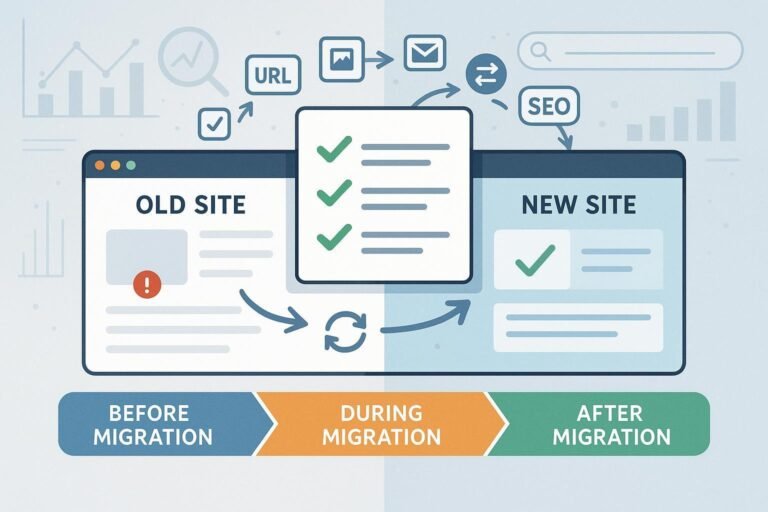
Ask for a written scope that names the deliverables, cadence, review rounds, publishing responsibilities, technical implementation boundaries, required access, and assumptions. Confirm whether the agency is offering advice, execution, or both. Ask how quickly your team must provide subject-matter feedback and who owns delays caused by dependencies.
Amy’s Brew currently presents SEO Foundation, Growth Partner, and Market Authority engagements on its services and pricing page. Package details and prices can change, so use the current page—not an old proposal or this article—as the source of truth.
What should a good first call accomplish?
A useful introductory conversation should clarify the problem, identify important unknowns, and outline a plausible first step. The agency should ask about your product and buyers, current organic performance, website constraints, internal capacity, and commercial goals. You should be able to explain what the agency would own and what your team would need to supply.
You do not need a complete strategy on a short introductory call. You do need enough clarity to decide whether the provider understands the problem and whether its working model could fit your organization.
If you are evaluating an integrated SEO and GEO partner, start with Amy’s Brew’s service overview and current call option. Bring your product materials, top competitors, current analytics, and the questions your sales team hears most often.
Frequently asked questions
How do I choose an SEO agency for a SaaS company?
Look for a provider that understands your product and buyer, connects research to commercial priorities, can explain its technical and content scope, and reports progress transparently. Ask how it handles implementation, subject-matter review, and attribution before signing.
Should a SaaS company hire a specialist SEO agency?
A specialist may be useful when the team needs SaaS-specific strategy, technical depth, product-led content, or additional execution capacity. The right choice depends on internal skills, development support, budget, and the work that must be done.
Can an agency guarantee Google rankings or AI citations?
No. An agency can improve technical access, content quality, relevance, and authority signals, then measure results. It cannot control ranking systems or guarantee that an AI platform will cite a particular brand.
How long should we give an SEO agency?
The appropriate evaluation period depends on the starting point, technical dependencies, competition, publishing cadence, and sales cycle. Agree on early milestones and review dates in advance. Do not treat a single month of ranking movement as proof of long-term commercial impact.
What should be included in an SEO agency proposal?
The proposal should define goals, discovery, priorities, deliverables, owners, cadence, implementation boundaries, required access, reporting, fees, term, and assumptions. Ask for clarification on any service label that is not tied to a concrete activity.
Talk through your organic growth priorities
The right partner should make your next steps easier to understand, not bury you in jargon or promise outcomes it cannot control. If you want to discuss how strategy, technical SEO, content, and AI search could fit together for your SaaS business, review Amy’s Brew’s services and start a growth conversation.