SaaS Content Strategy: Real Results From 3 Months of SEO
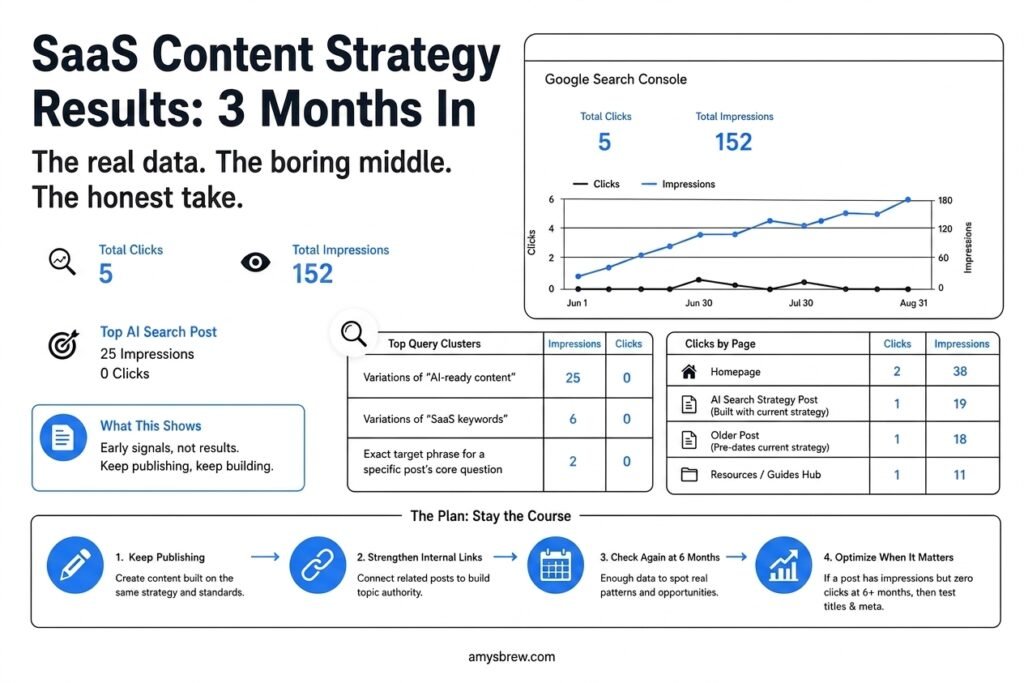
Most content strategy advice hides the boring middle part. Here’s mine, three months in, with the real numbers, including the parts that aren’t impressive yet.
Key Takeaways
- After three months, one blog post built specifically for AI search picked up 25 impressions across four closely related search queries, and zero clicks.
- Ahrefs found that only 1.74% of new pages reach Google’s top 10 within a year, so zero clicks at three months isn’t a warning sign. It’s normal.
- Across five total clicks in three months, one landed on a post built specifically around the current AI search strategy. The rest spread across the homepage, an older post, and a resources page.
- Impressions on the exact phrasing a post was written for is still a meaningful signal, even without clicks yet. It means the structure and intent are being read correctly.
- The right response to early data like this isn’t to panic-rewrite titles. It’s to keep publishing and check again at six months.
It’s tempting to write this kind of post only once the numbers look good. Wait for the traffic graph to curve upward, then publish the “here’s what worked” piece.
That post is easy to write and mostly useless. It skips the part everyone actually needs to see: what the first few months honestly look like before anything has taken off.
So here’s an honest one instead, pulled straight from real search performance data on a small, fairly new content site.
What the data actually shows
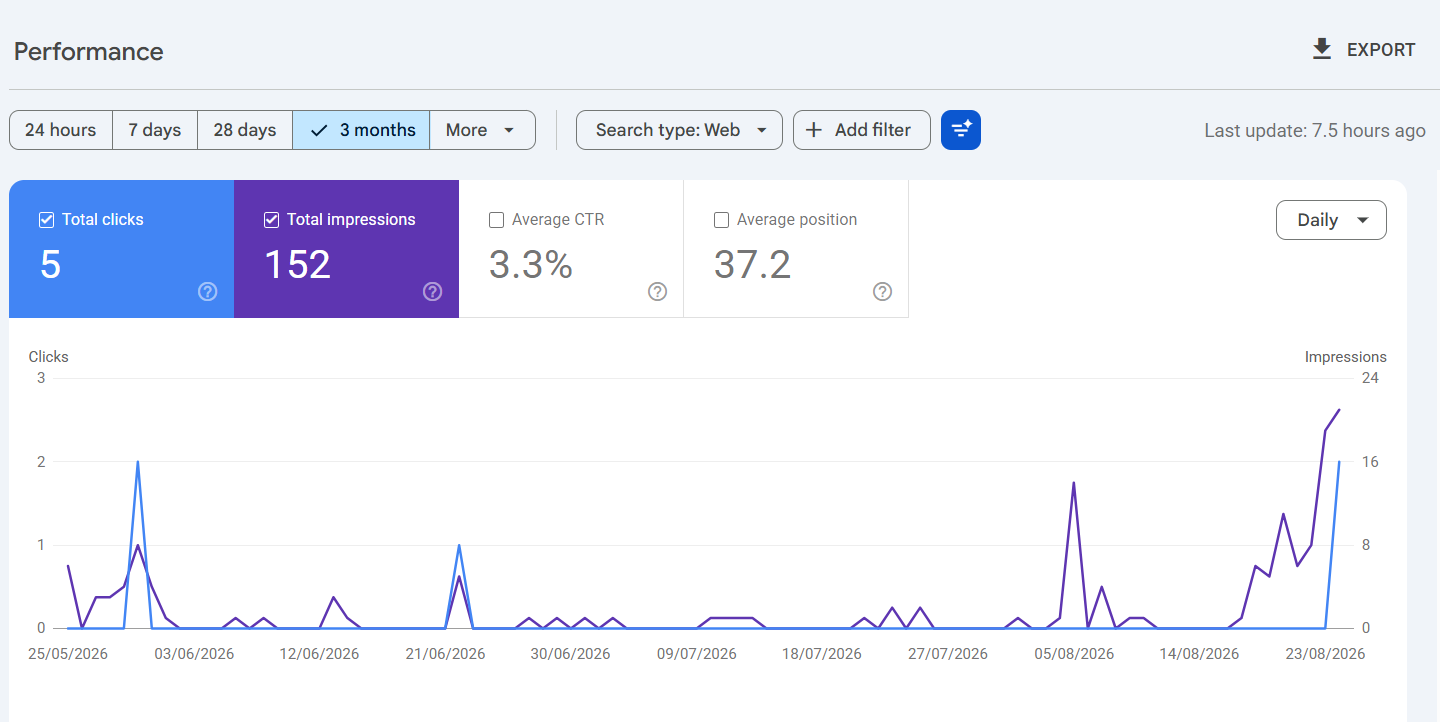
The full three-month performance view: 5 total clicks against 152 total impressions.
Over a three-month window, here’s what showed up in search performance reporting. Two different cuts of the same data are useful here: one table grouped by search query, showing what people were actually typing to find this content, and one grouped by page, showing where the real clicks landed. They tell different parts of the same story.
| Query cluster | Impressions | Clicks |
|---|---|---|
| Variations of “AI-ready content” | 25 | 0 |
| Variations of “SaaS keywords” | 6 | 0 |
| Exact target phrase for a specific post’s core question | 2 | 0 |
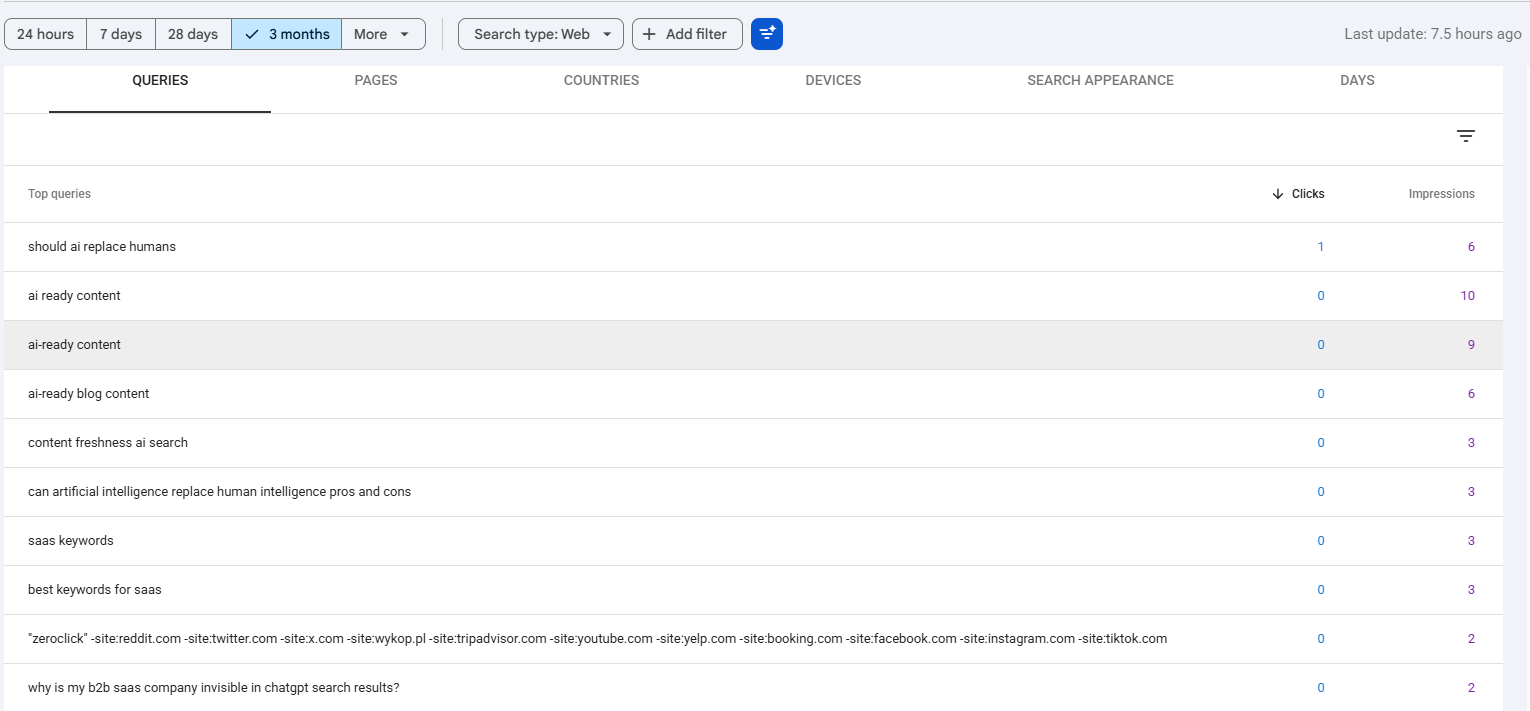
The raw query-level data behind the table above, as it appeared in Search Console.
The strongest cluster, by a clear margin, is the first one. Four closely related phrasings, all pointing at the same piece of content, all appearing within weeks of each other. That’s a decent early sign that a search engine has correctly identified what that page is about and is testing it against several related queries.
None of these clusters have produced a click yet. That’s the part worth sitting with instead of rushing past, and it’s a separate question from where the site’s actual clicks did come from, covered next.
What this data does not tell you
It would be easy to read zero clicks as a failure and start rewriting titles and meta descriptions. That would be a mistake at this stage, for a simple reason: the sample size is too small to mean anything yet.
Six or twenty-five impressions spread across three months isn’t enough volume to judge whether a title is working or not. A 0% click-through rate on that little data could just as easily flip after another month of the same content sitting in search results, gradually climbing in position.
The honest read: new websites take time to earn trust with search engines. Ahrefs found that most pages in Google’s top 10 are several years old. Three months in, this data isn’t a verdict. It’s a baseline.
Where the clicks actually came from
Total clicks across the same three-month window: five. This time the cut is by page, not by query, since that’s what actually shows where a visit landed.
| Page | Clicks | Impressions |
|---|---|---|
| Homepage | 2 | 38 |
| A post built specifically around AI search visibility strategy | 1 | 19 |
| An older post, written before the current content strategy existed | 1 | 18 |
| A resources or guides hub page | 1 | 11 |
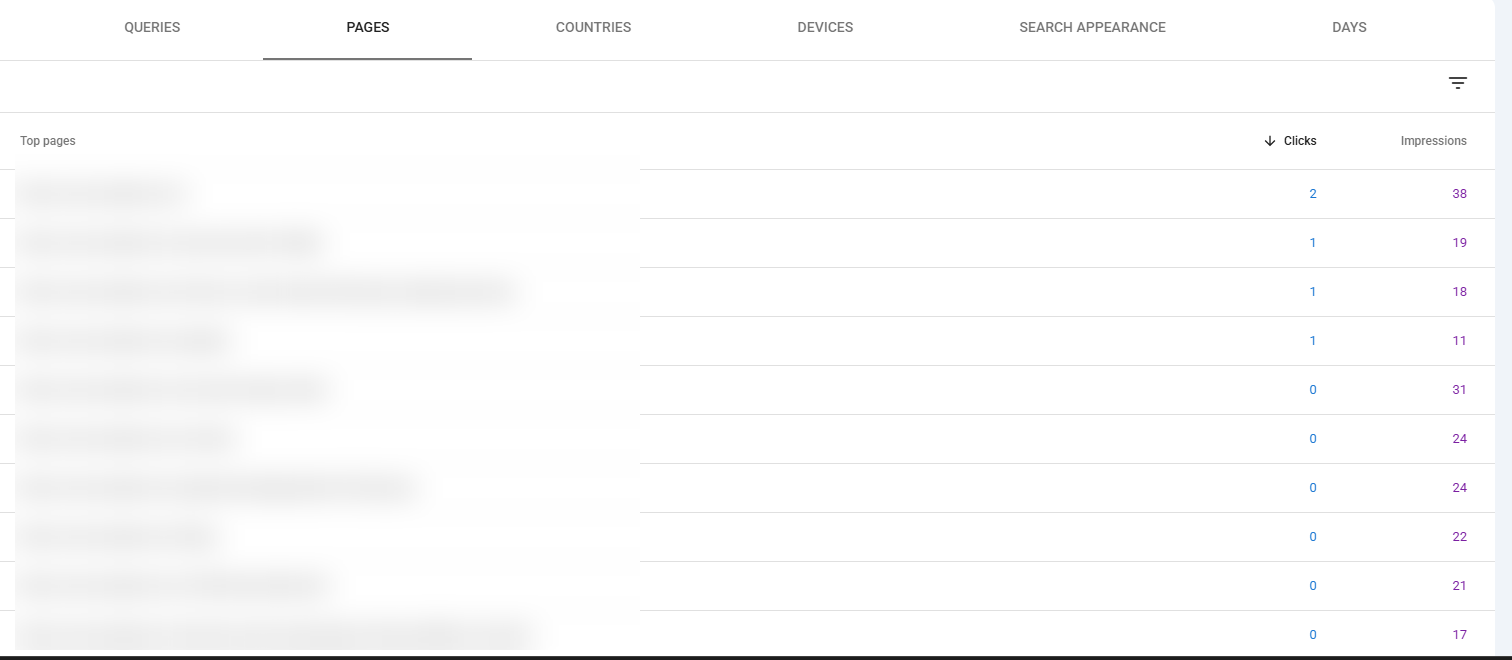
A page-level view of the same three-month window. URLs have been blurred; the click and impression counts are shown as they appeared in Search Console.
This is a more useful picture than “one lucky click.” One of the five clicks landed on a post built specifically around the current AI search strategy, earning a click on roughly one in every nineteen times it appeared in search results. That’s a small number, but it’s a real one, and it means the strategy isn’t just generating impressions with nothing behind them.
The rest of the clicks are spread across the homepage, an older post that predates the current approach, and a general resources page. None of that is a failure. It’s what an honest early spread looks like: a mix of intentional content starting to earn attention, alongside pages that were never built with this strategy in mind but exist on the site anyway.
The two posts built most heavily around the current AI-search structure and sourcing standards are still sitting at zero clicks, despite meaningful impressions. That’s the part still waiting to show results, not a sign the approach isn’t working.
What happens next
Nothing dramatic. The plan is to keep publishing on the same strategy, keep the internal linking between posts consistent, and check this same data again at six months, when there’s enough volume to actually draw a conclusion from it.
If a post is still sitting at meaningful impressions with zero clicks by then, that’s the point where a title or meta description rewrite becomes worth testing. Not before.
Frequently Asked Questions
Should I panic if my new content gets impressions but no clicks?
No, not in the first few months. Low click-through rates on small impression counts aren’t statistically meaningful. Wait until you have enough volume to see a real pattern before changing anything.
How long should I wait before judging whether a post is working?
At least a few months, and ideally longer. New pages generally take time to build trust with search engines, so early data should be treated as a baseline, not a verdict.
Does it matter which pages the early clicks land on?
It’s worth checking, but not worth overreacting to either way. A click on a strategic post is a good sign. A click on an older or unrelated page isn’t a bad sign, it’s just a reminder that early search data is spread out and noisy in both directions.
Want a content strategy built on real data, not guesswork?
I help SaaS and B2B tech companies build content strategies that are honest about what early results actually look like, and what to do about them.