I did not realize how quietly AI had slipped into my personal life until I noticed it speaking through people. The first hint came at a dinner party when a friend’s conversation tiptoed suspiciously around a string of buzzwords and phrases I’d recently seen online. It was smooth yet echoed the content of popular articles verbatim, making me question whether her insights were truly her own.
A few weeks ago, I was at a wedding. The vibe was good, the room was warm, and then a friend stood up to give a toast. Within the first minute, something felt off. The phrases kept looping back on themselves. The metaphors sounded way too polished. The rhythm felt calculated, like a machine trying to sound human. It was not bad writing. It was almost too smooth. I could not prove it, but I was certain the toast was AI-generated. Instead of feeling moved, I felt distracted. A moment meant to be personal felt outsourced. At that moment, I understood Marilyn Monroe’s quote, “Imperfection is beauty.”
Imperfection is beauty
Marilyn Monroe
That moment stuck with me because it captured a bigger problem. The problem that’s really troubling me for a while: AI is no longer just helping us work faster. It is quietly replacing moments where thinking, feeling, and struggling were once part of being human.
This reminded me of a story I once read in college. The Man Who Was a Hospital, by Jerome K. Jerome, and the story slowly revealed how a man had become obsessed with diagnosing himself. It details a man’s hypochondriacal journey, where he diagnoses himself with almost every disease, only for a doctor to advise him that he needs no medicine, but rather to stop overthinking and live properly. At the time, it felt exaggerated. Almost funny.
Today, it feels uncomfortably accurate.
Now, instead of going to a doctor and asking what is wrong, people turn to AI. They describe a headache, a cough, and a strange feeling in their chest. Within seconds, they receive a long list of possible conditions. Some minor. Some terrifying. Anxiety kicks in. The mind fills in the gaps. AI becomes a pseudo doctor, not because it is qualified, but because it is always available and sounds confident.
The problem is not that AI gives information. The problem is that it gives too much, without context, responsibility, or human judgment. It does not see your face. It does not hear fear in your voice. It does not know when reassurance matters more than accuracy.
There is also a deeper issue that worries me even more. The memorization crisis. I recently came across an article in The Atlantic that discussed how reliance on AI is slowly eroding our ability to remember, reason, and sit with uncertainty. When answers are instant, thinking feels unnecessary. When summaries are automatic, memory feels optional.
I feel this in my own life. I ask AI questions I could easily think through. I let it finish my sentences. I let it decide how something should sound. Slowly, without noticing, my brain wants to do less work.
We have started treating AI like a brain when in reality, it is not thinking at all. It is compressed information. Patterns stacked on patterns. It does not understand the meaning. It predicts what comes next. That distinction matters more than we admit.
AI entered our lives as a tool to reduce friction. To save time. To remove repetition. Somewhere along the way, we started handing it responsibility for judgment, creativity, memory, and even emotion. That is a dangerous trade.
Behind this trade are powerful market forces. Companies like Google, Amazon, and Facebook have built extensive platforms that encourage dependency on AI-driven solutions. These corporations profit immensely from outsourcing judgment, creativity, and memory, creating a marketplace that prioritizes convenience over caution. Highlighting this aspect might make us more aware of how easily the lines between utility and dependency blur, underscoring the urgency to reclaim what makes us fundamentally human.
I am not anti-AI. I use it daily. But I am becoming more conscious of where it belongs and where it does not. I have come up with a simple mantra to guide my use of AI: Assist, Inform, Inspire. It should help me write, not replace my voice. It should assist my research, not replace my curiosity. It should support decisions, not make them for me.
AI should never replace me, because it’s we who made AI to work for us, not the other way around.
If we are not careful, convenience will quietly turn into dependency. And dependency will slowly turn into atrophy.
The real dilemma is not whether AI is powerful. It clearly is. The dilemma is whether we are willing to protect the parts of ourselves that should never be automated. Thinking. Remembering. Feeling uncertain. Sounding imperfect. Being human.
Those things were never bugs in the system. They were the point.
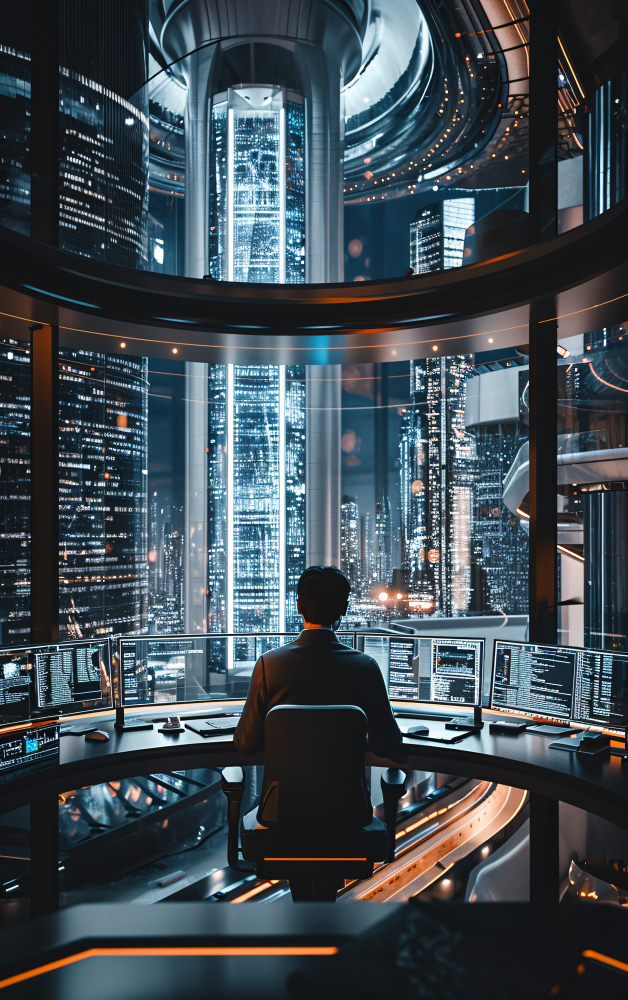
The Dilemma of Using AI in Personal Life